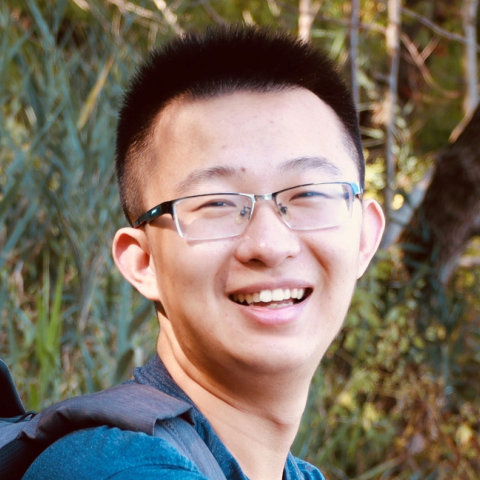
Chen Hu
Applied Scientist at Amazon AWS · LLM post-training, agentic RL, large-scale evaluation & inference
About
I work on LLM post-training at Amazon AWS. Most of my time goes into reinforcement learning for coding agents: the RL environments the agent works in, the rewards, large-scale asynchronous RL training on dense and MoE models, the serving stack behind long-horizon agent tasks, and the held-out evaluations that tell us whether a change actually helped.
Before this, I built math and code SFT data checked with formal verification (Lean) and ran SFT training for Amazon Nova, and worked on prompt optimization and hallucination detection for Alexa.
I have a Ph.D. in Civil Engineering, where I built statistical and physics-based models of material failure, and an M.S. in Computer Science, both from the University of Minnesota.
Experience
AWS Agentic AI · May 2025 – Present
- Owned the agentic-RL recipe end to end for the AWS Kiro coding agent: an in-house, difficulty-measured corpus of SWE-bench-style RL environments (containerized sandboxes, deduplicated and decontaminated against public benchmarks, used for curriculum training) and test-execution rewards built to resist reward hacking.
- Trained dense and MoE models with asynchronous GRPO, from small-scale ablations that set the recipe to large production runs on H100/H200 clusters; extended miles (on Ray) to run asynchronous agentic rollouts on KiroRolloutService.
- Improved the base model by +5.1 points on a SWE-bench-style benchmark and +20.7 on a held-out eval, averaged over multiple runs.
- Optimized online serving of large MoE models for long-horizon agent tasks with PD disaggregation, speculative decoding, expert parallelism, and KV cache management: +30% throughput.
- Built math and code SFT data paired with formal verification (Lean), tuned the data mix, and ran the SFT training on Amazon Nova; the data shipped into a production training run.
- Building an agent that proposes repository properties, formalizes them in Lean, and proves or disproves them in a long-horizon agent loop.
Alexa · Nov 2024 – May 2025
- Optimized in-context example selection for Alexa LLM prompts: +4.4% accuracy.
- Built an entropy-based uncertainty signal to flag hallucinations for routing and fallback.
- Developed FLAC3D, a commercial numerical-simulation product, in C++: graphics, computational algorithms, and I/O.
- Built a GPT-based assistant over the product documentation to answer customer technical questions.
- Built an LLM-based pipeline to predict entity salience in very short documents (Alexa Q&A pairs). Deployed online: +25.7% salient-entity coverage and +2% click-through rate.
- Built physics-based and probabilistic models of material failure: a time-dependent damage model for SiC/SiC composites (nuclear cladding) and size-effect models for quasi-brittle materials, extrapolating lab data to component-level failure risk.
- Applied statistical modeling and ML to characterize and localize acoustic-emission signals in large experimental datasets.
Tools
Publications
- Predicting Entity Salience in Extremely Short Documents
B. Bullough, H. Lundberg, C. Hu, W. Xiao · EMNLP 2024 (Industry Track) - Experimental investigation of probabilistic failure of SiC/SiC composite tubes under multiaxial loading
C. Hu, J.-L. Le, T. Koyanagi, J. F. Labuz · Composite Structures, 2024 - Mechanistic modeling of lifetime distribution of SiC/SiC composite claddings
C. Hu, J. F. Labuz, T. Koyanagi, J.-L. Le · Journal of the American Ceramic Society, 2023 - Stress focusing and damage protection in topological Maxwell metamaterials
C. Widstrand, C. Hu, X. Mao, J. F. Labuz, S. Gonella · International Journal of Solids and Structures, 2023 - Microcracking in tensile fracture of a brittle rock
X. Wang, P. Asem, C. Hu, J. F. Labuz · Engineering Fracture Mechanics, 2021 - On tensile fracture of a brittle rock
P. Asem, X. Wang, C. Hu, J. F. Labuz · International Journal of Rock Mechanics and Mining Sciences, 2021
Full list on Google Scholar.